Month: March 2026

fundamentals of nursing exam 1 pdf

Fundamentals of Nursing Exam 1 PDF: A Comprehensive Study Plan

Preparing for your Fundamentals of Nursing Exam 1? Leverage resources like practice questions with rationales‚ textbooks (Wilkinson & Treas)‚ and online platforms (Study.com‚ Quizlet) for success!

Understanding the Exam Scope

The Fundamentals of Nursing Exam 1 typically assesses core concepts crucial for safe and effective nursing practice. Expect questions mirroring content from textbooks like Wilkinson and Treas’s “Fundamentals of Nursing‚” 2nd edition‚ and supplementary CD materials.

The exam’s focus includes basic nursing skills‚ patient safety‚ medication administration‚ and foundational knowledge of physiological processes. A significant portion will likely test your understanding of pain management – differentiating between somatic‚ visceral‚ and referred pain‚ as demonstrated in NCLEX-style questions.

Preparation should prioritize mastering these fundamentals‚ utilizing practice exams (like those available on Study.com and Amazon.com) to identify knowledge gaps. Familiarize yourself with the exam format and question types to build confidence and optimize performance. Resources like Docsity offer revised exams with answers for focused study.

Key Concepts in Fundamentals of Nursing

Core concepts for Exam 1 center around the nursing process‚ encompassing assessment‚ diagnosis‚ planning‚ implementation‚ and evaluation. A strong grasp of physiological integrity – including vital signs and their interpretation – is essential‚ as is understanding altered states of consciousness and their implications.

Patient safety and risk management are paramount; expect questions testing your knowledge of infection control and safe medication administration. Mastering basic nursing skills‚ like proper positioning and hygiene practices‚ forms a foundational element.

Resources like practice question books (Nugent’s NCLEX-RN review) and online platforms (Quizlet) reinforce these concepts. Focus on applying theoretical knowledge to practical scenarios‚ mirroring the NCLEX-RN exam’s emphasis on critical thinking and clinical judgment. Textbooks like Wilkinson & Treas provide a solid base for understanding these key principles.

Patient Safety and Risk Management

Prioritizing patient safety is central to Fundamentals of Nursing. Exam 1 will likely assess your understanding of preventing falls‚ medication errors‚ and healthcare-associated infections. Recognizing potential risks – like those following a hip fracture – and implementing appropriate interventions is crucial.

Concepts like proper body mechanics‚ safe lifting techniques‚ and accurate patient identification are fundamental. Familiarize yourself with incident reporting procedures and the importance of maintaining a safe environment.

Resources such as NCLEX review books (Nugent) emphasize rationales for correct and incorrect answers‚ helping you understand why certain actions mitigate risk. Practice questions (Study.com) will challenge you to apply these principles in clinical scenarios. A proactive approach to identifying and addressing potential hazards is key to successful exam performance and safe patient care.

Basic Nursing Skills: Vital Signs

Mastering vital sign assessment is foundational for nursing practice and a significant component of Fundamentals of Nursing Exam 1. Expect questions covering accurate measurement of temperature‚ pulse‚ respiration‚ blood pressure‚ and pain – utilizing appropriate techniques and equipment.

Understanding normal ranges‚ factors influencing vital signs‚ and recognizing abnormal findings are essential. Be prepared to interpret data and report deviations promptly. Resources like NCLEX review materials (Nugent) provide practice questions with detailed rationales‚ reinforcing your understanding.

Quizlet flashcards offer a convenient way to memorize normal values and assessment procedures. Practice applying your knowledge to patient scenarios‚ considering how injury (like a hip fracture) might affect vital signs. Proficiency in vital sign assessment demonstrates a core nursing skill and is vital for exam success.

Medication Administration Fundamentals

Safe and effective medication administration is a cornerstone of nursing‚ heavily emphasized on Fundamentals of Nursing Exam 1. Expect questions assessing your knowledge of the “rights” of medication administration – right patient‚ drug‚ dose‚ route‚ and time. Understanding medication classifications‚ common side effects‚ and contraindications is crucial.

Practice questions with rationales (available in NCLEX review books and online platforms like Study.com) are invaluable for reinforcing these concepts. Focus on dosage calculations‚ understanding different routes of administration‚ and proper documentation procedures.

Resources like Wilkinson & Treas’ textbook provide a solid foundation. Be prepared to apply your knowledge to patient scenarios‚ recognizing potential medication errors and appropriate interventions. Mastering these fundamentals ensures patient safety and demonstrates competency for the exam.

Pain Management Principles

Effective pain management is a critical nursing skill‚ frequently tested on Fundamentals of Nursing Exam 1. Understanding different types of pain – somatic‚ visceral‚ and referred – is essential‚ as illustrated by practice questions (Quizlet‚ Amazon review books). A patient with a hip fracture‚ for example‚ likely experiences deep somatic pain originating from bones and ligaments.

The exam will assess your knowledge of pain assessment tools‚ pharmacological and non-pharmacological interventions‚ and the importance of individualized pain management plans. Be prepared to analyze patient scenarios and determine appropriate nursing actions.

Resources like NCLEX review materials emphasize rationales for correct and incorrect answers‚ aiding comprehension. Focus on understanding pain pathways‚ opioid and non-opioid analgesics‚ and the potential for adverse effects. Prioritizing patient comfort and advocating for effective pain relief are key.

Types of Pain (Somatic‚ Visceral‚ Referred)

Differentiating pain types is crucial for effective nursing care and a key component of Fundamentals of Nursing Exam 1. Somatic pain arises from tissues like skin‚ muscles‚ and bones – think a hip fracture causing localized discomfort (Quizlet examples). Visceral pain originates from internal organs‚ often described as deep and poorly localized.

Referred pain is particularly challenging; it’s perceived at a site distant from its origin. Understanding these distinctions is vital for accurate assessment and appropriate intervention. Exam questions will likely present scenarios requiring you to identify the pain type based on patient descriptions and injury mechanisms.

Resources like practice exams (Study;com‚ Amazon review books) provide scenarios to hone your skills. Remember that pain perception is subjective‚ and thorough assessment is paramount. Knowing the origin helps guide treatment and improve patient outcomes.

Hygiene and Infection Control

Mastering hygiene and infection control is fundamental to nursing practice and heavily emphasized on Exam 1. This includes understanding principles of asepsis‚ medical and surgical asepsis‚ and proper hand hygiene techniques – the first line of defense against healthcare-associated infections (HAIs).

Knowledge of standard precautions (treating all body fluids as potentially infectious) and transmission-based precautions (contact‚ droplet‚ airborne) is essential. Exam questions will likely assess your ability to apply these principles in various clinical scenarios.

Review resources like textbooks and practice questions (Amazon review books‚ Docsity exams) to solidify your understanding of isolation protocols and appropriate personal protective equipment (PPE) usage. Prioritizing patient safety through diligent hygiene practices is a core nursing responsibility.

Nutrition and Hydration

Fundamentals of nutrition and hydration are crucial for patient well-being and a significant component of Exam 1. Expect questions assessing your understanding of essential nutrients – carbohydrates‚ proteins‚ fats‚ vitamins‚ and minerals – and their roles in maintaining health.

Fluid balance is equally important; be prepared to calculate intake and output‚ recognize signs of dehydration and fluid overload‚ and understand the principles of intravenous (IV) fluid therapy.

Review dietary modifications for common conditions and the importance of nutritional assessments. Utilize practice questions and study materials (like those found on Study.com and in review books) to reinforce your knowledge of patient-specific nutritional needs and appropriate interventions. Prioritize understanding how nutrition impacts healing and overall patient outcomes.

Mobility and Positioning

Mastering mobility and positioning principles is vital for Fundamentals of Nursing Exam 1. Expect questions focusing on body mechanics‚ safe patient handling techniques‚ and the prevention of complications associated with immobility‚ such as pressure ulcers and deep vein thrombosis.

Understand the proper use of assistive devices – walkers‚ canes‚ and wheelchairs – and the importance of assessing a patient’s fall risk. Review different positioning techniques to promote comfort‚ respiratory function‚ and circulation.

Practice questions (available through resources like Amazon.com’s NCLEX-RN review books and Quizlet flashcards) will help solidify your understanding of range of motion exercises and the collaborative approach required when assisting patients with mobility. Focus on patient safety and minimizing risk during transfers and ambulation.

Communication and Therapeutic Relationships

Effective communication forms the cornerstone of nursing care‚ and will be heavily tested on Fundamentals of Nursing Exam 1. Focus on therapeutic communication techniques – active listening‚ empathy‚ and providing clear‚ concise explanations – to build rapport with patients.

Understand the impact of verbal and nonverbal communication‚ and how cultural factors can influence interactions. Expect questions regarding patient rights‚ confidentiality (HIPAA)‚ and the nurse’s role in advocating for patients.

Review different communication barriers and strategies to overcome them. Practice identifying appropriate responses in various patient scenarios. Resources like practice exams (Study.com) and NCLEX review materials emphasize the importance of establishing a trusting‚ therapeutic relationship to facilitate optimal patient outcomes and accurate information gathering.

Documentation and Reporting

Accurate and thorough documentation is paramount in nursing‚ and a key component of Fundamentals of Nursing Exam 1. Expect questions focusing on legal aspects of charting‚ including the principles of confidentiality and avoiding subjective language.

Master proper charting techniques – using objective data‚ documenting interventions and patient responses‚ and ensuring timely documentation. Understand the importance of incident reports and how to accurately document any deviations from the standard of care.

Familiarize yourself with different reporting methods (verbal‚ written‚ electronic) and the appropriate channels for communicating critical information. Practice identifying errors in documentation and understanding the consequences of inaccurate or incomplete records. Resources emphasize the need for clear‚ concise‚ and factual reporting to ensure continuity of care and legal protection.

Accurate Charting Techniques

Effective charting relies on several core principles. Focus on factual‚ objective data – avoid subjective interpretations like “patient seems uncomfortable.” Document precisely what you observe‚ measure‚ and do. Utilize standardized abbreviations and approved terminology to minimize ambiguity.

Time and date every entry‚ and sign or electronically authenticate all documentation. Chart interventions after they are performed‚ never pre-charting; Corrections should be made with a single line through the error‚ initialed and dated – never obliterate original entries.

Understand the importance of documenting patient responses to interventions. Include both positive and negative outcomes. Practice documenting concisely yet comprehensively‚ ensuring all essential information is captured. Resources highlight the legal ramifications of inaccurate charting‚ emphasizing its role in patient safety and legal defense.

Fundamentals of Nursing and Altered States of Consciousness

Understanding altered mental states is crucial in nursing. These states‚ ranging from confusion to coma‚ require diligent assessment of the patient’s level of consciousness using tools like the Glasgow Coma Scale. Nursing interventions focus on maintaining airway‚ breathing‚ and circulation while protecting the patient from injury.

Factors contributing to altered states include hypoxia‚ infection‚ medication effects‚ and metabolic imbalances. Differentiating between delirium and dementia is vital; delirium is often acute and reversible‚ while dementia is progressive.

Resources emphasize that both altered states of consciousness and pain management can lead to these conditions. Effective communication‚ frequent neurological checks‚ and a safe environment are paramount. Recognizing early signs of deterioration allows for prompt intervention and improved patient outcomes.

NCLEX-RN Exam Preparation Strategies

Success on the NCLEX-RN requires a strategic approach. Utilize comprehensive review books specifically designed for the exam‚ focusing on Fundamentals of Nursing content. Practice questions are essential – aim for at least 349 practice questions with detailed rationales‚ analyzing both correct and incorrect answers to understand the ‘why’ behind each choice.

Prioritize areas where you struggle‚ revisiting core concepts and utilizing online platforms like Study.com and Quizlet for targeted review. Time management is key during the exam; practice answering questions under timed conditions.

Focus on understanding the nursing process and applying critical thinking skills. Remember to read each question carefully‚ identify keywords‚ and eliminate obviously incorrect options. A well-structured study plan and consistent effort are vital for achieving a passing score.

Practice Questions and Rationales

Mastering Fundamentals of Nursing demands consistent practice with realistic exam questions. Resources like those found on Quizlet‚ Study.com‚ and dedicated NCLEX review books (containing 349+ questions) are invaluable. Focus on questions mirroring the exam’s format and difficulty.

Crucially‚ don’t just answer – analyze the rationales. Understanding why an answer is correct‚ or incorrect‚ solidifies your knowledge. For example‚ a question about a hip fracture might assess your understanding of somatic pain.

Effective practice involves identifying knowledge gaps and revisiting relevant textbook material. Regularly review your performance‚ noting recurring errors. Utilize practice exams to simulate the testing environment and build confidence. Detailed rationales are the cornerstone of effective self-assessment and improvement.

Resources for Exam Success (Textbooks‚ Online Platforms)

Numerous resources support your Fundamentals of Nursing Exam 1 preparation. Core textbooks like “Fundamentals of Nursing” by Wilkinson and Treas (2nd edition‚ ISBN: 978080362354-5) provide foundational knowledge. Supplement this with dedicated NCLEX-RN review books offering focused practice questions and detailed rationales – a crucial component for understanding correct and incorrect answers.

Online platforms like Quizlet offer flashcards and practice quizzes‚ while Study.com provides comprehensive practice tests with immediate results. Amazon.com hosts specialized review books‚ such as those by Patricia M. Nugent‚ designed to specifically address the Fundamentals section of the NCLEX-RN.

Docsity also provides access to revised exam questions with answers. Combining these resources ensures a well-rounded and effective study approach.


brother p touch user guide

Brother P-Touch User Guide: A Comprehensive Overview (Updated 03/26/2026)

This guide details the Brother P-Touch labeling system, specifically models like the PT-45, allowing users to print up to nine identical label copies efficiently.

Brother P-Touch label makers are versatile tools designed for a multitude of organizational and identification needs. From home offices to industrial settings, these devices offer a convenient way to create durable, professional-looking labels. The P-Touch series has evolved significantly, with models like the PT-45 representing a balance of affordability and functionality.

These electronic labeling systems empower users to easily print labels for various applications, including file folders, storage boxes, cables, and more. A key feature across many models is the ability to produce multiple copies of the same label – up to nine, as noted in recent documentation – streamlining repetitive labeling tasks. Always allow the labeler to cool before handling to prevent potential damage.

Understanding P-Touch Models (PT-45 & Beyond)

The Brother P-Touch lineup extends far beyond the foundational PT-45 model, offering a spectrum of features and capabilities. While the PT-45 provides a reliable entry point for basic labeling needs, subsequent models introduce enhancements like larger displays, expanded font choices, and connectivity options. Newer generations often support printing directly from computers or mobile devices.

Regardless of the specific model, a core function remains consistent: the ability to efficiently create and print labels. The PT-45, for example, allows for up to nine identical label copies per print job. Understanding your model’s specific features, as detailed in its user guide, is crucial for maximizing its potential and ensuring optimal performance. Remember to allow cooling time after use.

What’s Included in the Box?

Upon opening your Brother P-Touch package, you should find several key components. Primarily, the box contains the P-Touch label maker unit itself, ready for setup. A starter TZe tape cassette is typically included, allowing you to begin labeling immediately. You’ll also receive a user guide, providing detailed instructions on operation and troubleshooting.

Depending on the model, additional items may be present, such as an AC adapter for powered operation, a USB cable for computer connectivity, or a warranty card. Carefully verify all contents against the packing list to ensure everything is accounted for. Retain the packaging for potential future transport or warranty claims.

Setting Up Your P-Touch Label Maker

Initial setup is straightforward. First, insert the batteries (if not using the AC adapter) following the polarity markings inside the battery compartment. Next, install the TZe tape cassette – ensure it clicks securely into place. Power on the device using the power button. The display will prompt you to configure initial settings, such as language and date/time.

If connecting to a computer, install the necessary P-Touch software from the provided CD or download it from the Brother support website. Follow the on-screen instructions to complete the software installation and establish a connection via the USB cable. Your P-Touch is now ready for labeling!

Getting Started: Basic Operations

Begin by powering on your P-Touch and navigating the intuitive display. Load a TZe tape, select desired fonts, and create your first label easily.

Powering On and Initial Settings

To begin, locate the power button on your Brother P-Touch label maker – its position varies slightly depending on the model. Press and hold the power button until the display illuminates. Upon initial startup, you may be prompted to select your preferred language and date/time format.

Navigate these settings using the directional buttons and confirm your selections with the ‘OK’ or ‘Enter’ button. Some models may also ask you to specify the label length unit (inches or millimeters). Ensure these initial settings are accurate for optimal performance and a personalized user experience. Remember to avoid touching the labeler while it’s cooling down after use.

Loading the TZe Tape Cassette

Begin by lifting the cassette cover on your Brother P-Touch. Gently insert the TZe tape cassette into the compartment, ensuring it clicks securely into place. The tape should unwind smoothly from the cassette. Verify the tape is feeding correctly by manually turning the tape wheel – it should rotate without resistance.

Proper tape loading is crucial for preventing jams and ensuring clear, consistent prints. Always use genuine Brother TZe tapes for optimal performance and to avoid damaging the printhead. After loading, close the cassette cover firmly. Avoid touching the labeler during cooling periods to prevent potential issues with the tape mechanism.

Navigating the P-Touch Display

The P-Touch display utilizes a clear, intuitive interface. Typically, you’ll find buttons for power, print preview, font selection, and editing functions. Use the directional buttons to scroll through menus and options. The ‘OK’ or ‘Enter’ button confirms your selections.

Familiarize yourself with the display icons – they represent features like bolding, underlining, and symbol insertion. Pressing the ‘Shift’ key often unlocks additional characters and functions. The display also shows remaining tape length and battery status. Experiment with the buttons to understand their functions and efficiently create your desired labels.

Selecting Fonts and Styles

Brother P-Touch label makers offer a variety of fonts and styles to personalize your labels. Access the font menu via the display’s navigation buttons. You can typically choose from several built-in fonts, ranging from standard to more decorative options.

Beyond font selection, you can apply styles like bold, italic, underline, and shadow to emphasize text. Some models allow adjusting font size for better readability. Explore the available options to find the perfect combination for your labeling needs. Remember that certain fonts and styles may consume more memory or tape length.

Advanced Features & Functions

Unlock greater labeling potential with templates, symbols, and precise control over label length and quantity, enabling efficient and customized printing solutions.

Creating and Editing Labels

The Brother P-Touch allows for extensive label customization. Begin by entering your desired text using the on-screen keyboard. Utilize the edit functions to correct errors, insert spaces, or modify capitalization. Explore font options to select a style that suits your needs – bold, italic, or underlined text are readily available.

Beyond basic text, incorporate symbols from the built-in library to enhance clarity and visual appeal. Adjust the label layout to center, left-align, or right-align the text. Preview your label before printing to ensure accuracy. For repetitive tasks, save frequently used labels as templates for quick access, streamlining your workflow and maximizing efficiency. Remember to consider the tape width when designing your labels.

Using Templates and Symbols

Brother P-Touch label makers offer a variety of pre-designed templates to simplify label creation for common applications like file folders, storage boxes, and cables. Browse the template library directly on the device, selecting a design that fits your purpose. These templates often include pre-formatted text and symbols, saving you time and effort.

Enhance your labels further by incorporating symbols. The P-Touch includes a comprehensive symbol library, accessible through the device’s menu. Add icons to indicate content, highlight important information, or simply add a visual element. Combining templates and symbols allows for professional-looking labels quickly and easily, improving organization and clarity.

Adjusting Label Length and Quantity

The Brother P-Touch allows precise control over label dimensions and the number of copies printed. Access the “Length” setting within the editing menu to customize the label’s size, ensuring it fits your application perfectly. This is crucial for maximizing tape usage and achieving a professional finish.

To print multiple labels, utilize the “Quantity” function. You can print up to nine identical copies of each label with a single command, streamlining tasks like asset tagging or bulk labeling. Remember to verify the available tape length before printing large quantities to avoid interruptions. Efficiently manage your labeling needs with these adjustable settings.

Printing Multiple Copies of Labels

The Brother P-Touch excels at repetitive labeling tasks. After designing your label, easily print multiple copies using the dedicated “Print Quantity” function. This feature allows you to specify the number of identical labels needed, up to a maximum of nine copies per print job, significantly boosting efficiency.

Before initiating a large print run, confirm sufficient tape is loaded to prevent mid-job interruptions. The P-Touch automatically handles the continuous printing process, delivering consistent results with each copy. This capability is ideal for organizing files, labeling storage boxes, or creating price tags in bulk, saving valuable time and effort.

Troubleshooting Common Issues

This section addresses frequent problems like tape jams, display malfunctions, and connectivity concerns, offering solutions to keep your Brother P-Touch functioning optimally.

Tape Jams and Errors

Experiencing a tape jam can interrupt your labeling workflow. First, power off the P-Touch label maker and carefully open the tape compartment. Gently remove any torn tape pieces, avoiding forceful pulling which could damage the mechanism. Ensure the tape cassette is properly seated and that the tape path is clear of obstructions.

If errors persist, consult the display for specific error codes, referencing the full user manual for their meanings. Avoid touching the labeler while it’s cooling down after a jam, as internal components may be warm. Regularly inspect the tape for wrinkles or damage before loading, as these can contribute to jams. Proper tape handling minimizes these issues.

Display Problems and Solutions

If your Brother P-Touch display is blank or exhibiting unusual behavior, begin by ensuring the device has sufficient battery power or is correctly connected to a power source. Try a simple reset by removing and reinserting the batteries, or disconnecting and reconnecting the AC adapter.

If the display remains problematic, check for any error messages displayed, and consult the comprehensive user manual for specific troubleshooting steps related to those codes. Avoid exposing the label maker to extreme temperatures or direct sunlight, as this can affect the LCD. If issues persist, contacting Brother support is recommended for further assistance.

Connectivity Issues (if applicable)

For P-Touch models offering connectivity – typically via USB or Bluetooth – troubleshooting connection problems begins with verifying the cable or pairing status. Ensure the USB cable is securely connected to both the label maker and your computer. For Bluetooth, confirm the device is in pairing mode and discoverable on your computer or mobile device.

Check your operating system for necessary drivers; Brother’s support website provides downloadable drivers for various systems. If pairing fails, try removing the P-Touch from the paired devices list and re-initiating the pairing process. Interference from other wireless devices can sometimes cause issues, so try moving closer to the P-Touch.

Battery Replacement and Power Management

Your Brother P-Touch label maker utilizes batteries for portable operation. When the low battery indicator appears on the display, promptly replace the batteries to avoid data loss during label creation. Use only the recommended battery type (typically AAA or AA alkaline batteries) as specified in your model’s documentation.

To maximize battery life, power off the device when not in use. Avoid mixing old and new batteries, and ensure correct polarity during installation. Some models feature an auto-power-off function to conserve energy; familiarize yourself with this setting. Regularly removing batteries during prolonged storage can prevent potential corrosion and damage.

Tape Types and Compatibility

Brother P-Touch label makers utilize TZe tape options, offering diverse widths and lengths to suit various labeling applications and user preferences effectively.

Understanding TZe Tape Options

Brother’s TZe (Thermal Transfer Zebra) tape is a laminated tape designed for durability and resistance to various environmental factors. It’s available in a wide spectrum of colors, including standard black on white, but also options like black on red, yellow, blue, and even metallic finishes for enhanced visibility and organization.

These tapes aren’t just about aesthetics; they offer practical benefits. The laminated construction makes them resistant to water, chemicals, abrasion, and fading, ensuring labels remain legible over time. Different TZe tape series cater to specific needs – standard tapes for general use, extra-strong adhesive tapes for textured surfaces, and flexible ID tapes for curved applications. Understanding these nuances allows users to select the optimal tape for their specific labeling tasks, maximizing longevity and clarity.

Choosing the Right Tape for Your Needs

Selecting the appropriate TZe tape hinges on the application and environment. For indoor, general-purpose labeling, standard TZe tapes suffice. However, outdoor or industrial settings demand tapes with enhanced durability – consider tapes with stronger adhesives for uneven surfaces or resistance to UV light and extreme temperatures.

Think about visibility too. Brightly colored tapes or metallic options can highlight important information. If labeling cables or wires, flexible ID tapes are ideal. Prioritize laminated tapes for areas exposed to liquids or chemicals. Matching the tape’s properties to the specific requirements ensures long-lasting, legible labels, preventing premature fading or detachment, ultimately saving time and resources.

Tape Widths and Lengths

Brother P-Touch label makers accommodate a variety of TZe tape widths, commonly ranging from 3.5mm to 24mm. Narrower widths (3.5mm, 6mm) are perfect for small items or detailed labeling, while wider tapes (12mm, 18mm, 24mm) offer greater visibility for larger surfaces or prominent identification.

Tape lengths typically come in 8-meter and 26.2-meter cassettes. The choice depends on labeling volume; frequent, large-scale projects benefit from longer tapes, reducing the need for frequent replacements. Consider the P-Touch model’s maximum tape capacity when selecting lengths. Understanding these dimensions ensures optimal label size and efficient tape usage, minimizing waste and maximizing productivity.

Maintenance and Care

Regular cleaning and proper storage extend your P-Touch’s lifespan. Keep both the label maker and tapes protected from dust and extreme temperatures for optimal performance.

Cleaning Your P-Touch Label Maker

To maintain optimal performance, regularly clean your Brother P-Touch label maker. Begin by ensuring the device is powered off and disconnected from any power source. Use a soft, dry cloth to gently wipe down the exterior casing, removing any dust or fingerprints.

For the print head, a slightly dampened (with isopropyl alcohol) cotton swab can carefully remove any accumulated adhesive residue. Avoid excessive moisture, as this could damage internal components. Never use abrasive cleaners or solvents. Pay particular attention to the tape guides and the area around the cutter, as these areas tend to collect debris.

Allow all surfaces to dry completely before reloading tape or powering on the device. Consistent cleaning prevents tape jams and ensures clear, crisp label printing. Remember to avoid touching the P-Touch while it’s cooling down after use.

Storing Your P-Touch and Tapes

Proper storage extends the life of your Brother P-Touch label maker and its tapes. When not in use, store the P-Touch in a cool, dry place, away from direct sunlight and extreme temperatures. Avoid locations with high humidity or dust accumulation.

Tape cassettes should also be stored in a similar environment. Keeping tapes in their original packaging, if possible, helps protect them from moisture and light. Avoid stacking heavy objects on top of the tapes, which could cause damage.

Remember not to touch the P-Touch labeler while it is cooling. Regularly check the storage area for any signs of pests or environmental issues that could affect the equipment.

Firmware Updates (if applicable)

Brother periodically releases firmware updates for certain P-Touch models to improve performance, add features, or address potential issues. Check the Brother Support website regularly for updates specific to your model number. These updates are typically downloaded to a computer and then transferred to the P-Touch via USB connection.

Before initiating an update, ensure your P-Touch has sufficient battery power or is connected to a power adapter. Carefully follow the on-screen instructions provided with the update file. Interrupting the update process can potentially damage the device, rendering it unusable.

Always back up any custom label formats or templates before performing a firmware update, as they may be erased during the process.

Safety Precautions

Avoid touching the P-Touch labeler while it’s cooling down after use to prevent potential burns, and always handle tapes with appropriate care.

Avoiding Damage to the P-Touch

To ensure the longevity of your Brother P-Touch label maker, several precautions should be observed. Never subject the device to extreme temperatures or direct sunlight for extended periods, as this can harm internal components. Avoid dropping the P-Touch, as impacts can damage the display or delicate mechanisms.

Refrain from disassembling the unit beyond recommended maintenance procedures; unauthorized repairs may void any warranty. Keep the P-Touch clean and free from dust and debris. Do not use abrasive cleaners or solvents, opting instead for a soft, dry cloth. Finally, always allow the device to cool completely before handling after prolonged use, preventing potential damage from heat.

Proper Tape Handling

Correct tape handling is crucial for optimal P-Touch performance and label quality. Always store TZe tape cassettes in a cool, dry place, away from direct sunlight, to prevent adhesive degradation. When loading a new cassette, ensure it clicks securely into place. Avoid touching the tape’s adhesive side, as fingerprints or contaminants can affect adhesion.

When peeling labels, do so slowly and evenly to prevent tearing. Discard used tape backing responsibly. Never attempt to reuse a partially used tape cassette, as this can cause jams or printing errors. Regularly inspect tapes for any signs of damage before use, ensuring a clean and professional finish for all your labeling needs.

dummy pdf download

Article Plan: Dummy PDF Download

This article explores dummy PDF files, their generation, and diverse applications for developers and testers. We’ll cover tools, features, and security aspects of utilizing these files.

Dummy PDF files are essential resources for software development, quality assurance, and system testing. These aren’t genuine documents containing sensitive information; instead, they are fabricated files designed to mimic the characteristics of real PDFs – size, structure, and MIME type – without revealing any actual content. They serve a crucial role when testing upload functionalities, bandwidth limitations, and file validation processes.

Generating these files on-demand, as offered by tools like dummypdf.com, allows testers to simulate various scenarios without needing authentic documents. This is particularly useful when dealing with strict data privacy regulations or when large volumes of test files are required. The ability to customize size and page count further enhances their utility.

Why Use Dummy PDF Files?

Dummy PDF files offer significant advantages across various testing phases. Primarily, they eliminate the risk of exposing confidential data during testing procedures. Instead of using real documents, which could breach privacy policies, developers can rely on these safe, fabricated alternatives. They are invaluable for verifying upload functionality, ensuring systems correctly handle PDF files of different sizes and complexities.

Furthermore, dummy PDFs are crucial for bandwidth and storage testing, allowing assessment of system performance under load. They also facilitate file validation and compatibility checks, confirming that applications correctly interpret PDF structures and MIME types. Tools like thetestdata streamline this process, generating multiple files for comprehensive testing.

Testing Upload Functionality

Dummy PDF files are exceptionally useful when rigorously testing upload functionalities within applications. Developers can simulate various user scenarios, including uploading files of different sizes – from minimal to the maximum allowed – to assess system behavior. This testing verifies that the application correctly handles file uploads, processes metadata, and stores the files securely.

Using tools like dummypdf.com allows for on-demand PDF creation, perfectly tailored for these tests. The ability to customize file size (up to 1189mm and 20 pages) is vital. Testing also includes verifying error handling when invalid file types are attempted, or when uploads exceed defined limits, ensuring a robust and user-friendly experience.

Bandwidth and Storage Testing

Dummy PDF files are invaluable for evaluating bandwidth consumption and storage capacity. By generating large PDF files – potentially reaching maximum size and page limits (up to 1189mm and 20 pages, taking up to 60 seconds to create) – testers can simulate real-world upload and download scenarios.

This allows assessment of network performance under stress, identifying potential bottlenecks and optimizing data transfer rates. Furthermore, generating numerous dummy files facilitates storage capacity testing, verifying the system’s ability to handle large volumes of data. Batch file generation features, capable of processing thousands of files, are particularly useful for this purpose, effectively acting as a disk space filler.

File Validation and Compatibility Checks

Dummy PDF files play a crucial role in verifying file upload functionality and ensuring compatibility across different systems. While the generated PDFs may be unopenable, their structure adheres to the PDF format’s requirements, allowing for robust validation tests. This includes checking for correct MIME types, essential for proper file handling by web servers and applications.

Testers can utilize these files to assess preflight checks, automation workflows, and overall PDF processing capabilities without relying on genuine, sensitive data. The ability to generate files in various formats – TXT, DOCX, CSV, JSON, XML, and more – extends these validation checks beyond PDF, ensuring broad compatibility.

Key Features of Dummy PDF Generators

Dummy PDF generators offer a range of features designed for efficient test data creation. A core capability is customizable file size, allowing users to specify dimensions in millimeters (mm), up to a maximum of 1189mm. Adjustable page numbers, reaching up to 20 pages, further refine file characteristics. Generation time scales with size and page count, potentially reaching 60 seconds for maximum configurations.

Many tools support batch file generation, enabling the creation of thousands of files simultaneously – ideal for disk space filling and comprehensive testing. Some generators, like dummypdf.com, offer URL-based generation for quick access, while others support multiple file formats beyond PDF.

Customizable File Size (mm)

A key feature of dummy PDF generators is the ability to precisely control the file’s dimensions. Users can define the width and height of the generated PDF in millimeters (mm), offering granular control over file characteristics. The maximum supported size reaches an impressive 1189mm, allowing for the creation of substantial dummy files.

This customization is crucial for simulating real-world upload scenarios and testing system limitations. Adjusting the size allows developers to assess how their applications handle varying file dimensions. Generating PDFs with maximum dimensions, alongside a high page count, can take up to 60 seconds, demonstrating the tool’s flexibility;

Adjustable Number of Pages

Alongside size customization, dummy PDF generators empower users to define the number of pages within the generated file. This feature is vital for comprehensive testing, simulating documents of varying lengths and complexities. The maximum number of pages supported is 20, enabling the creation of reasonably substantial dummy PDFs.

Combining a large page count with maximum dimensions (1189mm) provides a robust test case for evaluating system performance under stress. Generating a PDF with these maximum settings can require up to 60 seconds, highlighting the tool’s capacity for creating demanding test files. This adjustability ensures realistic simulation for upload and processing tests.

Batch File Generation

A significant advantage of advanced dummy PDF generators is their ability to create numerous files simultaneously – batch file generation. This functionality dramatically streamlines testing processes, particularly when evaluating disk space limitations or system responsiveness under heavy load. Users can define a list of filenames, such as “Test1.txt”, “Test2.txt”, and the generator will produce thousands of files in a single operation.

This capability positions these tools as effective disk space fillers and comprehensive test data generators. Batch processing saves considerable time and effort compared to manual file creation, making it ideal for large-scale testing scenarios and performance evaluations.

Popular Dummy PDF Generator Tools

Several online tools simplify the creation of dummy PDF files. dummypdf.com stands out with its URL-based generation; simply input width, height, and page count into a specific URL format to instantly create a PDF. Fake File Generator offers broader format support, allowing users to generate files with random data in formats like TXT, DOCX, and more, customizing them to specific needs.

thetestdata provides a convenient option to generate 50 dummy PDF files quickly, ideal for initial testing phases. These tools cater to diverse requirements, from simple PDF creation to generating varied file types for comprehensive testing and development workflows.

dummypdf.com – URL-Based Generation

dummypdf.com offers a remarkably streamlined approach to dummy PDF creation through direct URL manipulation. Instead of navigating a form, users can construct a specific URL incorporating desired parameters – width in millimeters, height in millimeters, and the number of pages. For example, https://dummypdf;com/lt;width-mm/lt;height-mm/lt;pages allows for on-demand PDF generation.

This method is exceptionally efficient for scripting or automating file creation. The tool quickly generates PDFs with custom dimensions, up to a maximum size of 1189mm and 20 pages, though larger files may take up to 60 seconds to generate. It’s a fast and flexible solution.

Fake File Generator

Fake File Generator provides a versatile solution for creating random files in various formats, extending beyond just PDFs. This tool caters to scenarios where you need files with random data for testing purposes, without the need for actual content. It simplifies the process of generating test data for diverse applications.

The process is straightforward: select your desired file type, customize the parameters to your specific needs, and the generator instantly creates the file. This allows for quick creation of files for upload testing, system validation, and other development tasks. It’s a convenient way to simulate real-world file interactions.

thetestdata – 50 File Generation

thetestdata offers a streamlined approach to generating dummy PDF files specifically for testing and development workflows. This tool allows users to quickly create a batch of 50 PDF files, providing a convenient resource for simulating larger datasets or testing bulk upload functionalities.

Utilizing the PDF file generator tool on thetestdata.com simplifies the process of acquiring test files. This is particularly useful for QA testers needing to assess system performance under load or developers verifying file handling capabilities. The generated files are readily downloadable and can be immediately integrated into testing environments, accelerating the development cycle.

File Format Support Beyond PDF

Dummy file generators aren’t limited to just PDF creation; they extend support to a wide array of file formats crucial for comprehensive testing. Popular options include TXT, DOCX, CSV, JSON, and XML, catering to diverse application needs. These generators create files with structurally correct, yet unopenable, content.

This expanded format support is invaluable for verifying MIME type handling and ensuring applications correctly process various file uploads. Developers can test how their systems respond to different file extensions and content types, bolstering robustness. The ability to generate diverse dummy files streamlines testing procedures and uncovers potential compatibility issues early in the development process.

TXT, DOCX, CSV, JSON, XML and More

Expanding beyond PDF, dummy file generators skillfully mimic various file types for thorough testing. They produce TXT files with random characters, DOCX documents with placeholder text, and CSV files with fabricated data. JSON and XML files are also generated, adhering to correct syntax but containing meaningless content.

This versatility allows developers to simulate real-world upload scenarios, verifying application behavior with diverse file formats. Crucially, these generated files possess the correct MIME types, ensuring accurate identification by receiving systems. This capability is essential for testing file validation routines and preventing potential security vulnerabilities related to improper file handling.

Understanding MIME Type Correctness

Maintaining correct MIME (Multipurpose Internet Mail Extensions) types is paramount when generating dummy files. These types inform the receiving system about the file’s nature, enabling proper handling. A mismatch can lead to errors, security risks, or failed uploads. Dummy file generators, like those discussed, prioritize accurate MIME type assignment.

For instance, a generated PDF will have the “application/pdf” MIME type, while a TXT file will be labeled “text/plain.” This ensures that applications interpret the file correctly, even if its content is random or unreadable. Verifying MIME type correctness is a vital part of testing upload functionality and overall system robustness, preventing unexpected behavior and potential exploits.

Generating Large Dummy PDF Files

Creating substantial dummy PDF files is crucial for bandwidth and storage capacity testing. Tools allow customization of both size (up to 1189mm) and page count (maximum 20 pages). However, generating files with these maximum parameters can be time-consuming, potentially taking up to 60 seconds.

This extended generation time highlights the importance of planning and resource allocation during testing. Larger files effectively simulate real-world scenarios, revealing potential bottlenecks in upload speeds, server load, and storage limitations. Utilizing URL-based generation, like dummypdf.com, offers a quick method, but complex configurations may require dedicated generator tools for precise control.

Maximum Size and Generation Time

Dummy PDF generators offer control over file dimensions and page numbers, but these choices impact generation time. A maximum size of 1189mm and 20 pages is often supported, representing a substantial file. Reaching these limits isn’t instantaneous; expect a delay of up to 60 seconds for completion.

This delay is due to the process of creating a structurally valid, albeit unopenable, PDF. Larger files are essential for rigorous testing of upload functionalities and system performance. Understanding this trade-off between size, page count, and generation time is vital for efficient testing workflows. Prioritize realistic file sizes based on testing needs.

Use Cases for Developers and QA Testers

Dummy PDF files are invaluable assets for developers and QA testers across numerous scenarios. They facilitate testing upload functionalities, ensuring systems handle various file sizes and types correctly. Bandwidth and storage capacity testing becomes straightforward with controllable file dimensions. Preflight checks and automation workflows also benefit from reliable dummy data.

Furthermore, these files aid in validating file formats and compatibility, confirming systems process PDFs as expected. They’re crucial for simulating real-world user behavior without risking sensitive data. Essentially, dummy PDFs provide a safe and efficient method for comprehensive software testing and quality assurance.

Security Considerations When Using Dummy Files

While dummy files are designed to be harmless, security awareness remains crucial. Although generated files contain random data and aren’t meant to be opened, avoid using them with sensitive systems without proper vetting. Ensure the dummy file generators themselves are reputable and don’t introduce malware or vulnerabilities.

Always scan downloaded dummy files with antivirus software as a precautionary measure. Be mindful of the source and avoid generators with questionable origins. While the files are structurally correct, they shouldn’t be treated as legitimate documents. Prioritize secure practices when integrating dummy files into testing environments to maintain overall system integrity.

Alternatives to Downloading Dummy PDFs

Beyond direct downloads, several alternatives exist for generating test files. Utilizing online generators like dummypdf.com offers on-demand PDF creation without local storage concerns. Scripting languages can programmatically generate files, providing greater control and automation. Consider using readily available test data sets or creating custom data tailored to specific testing needs.

For broader file format support, explore tools capable of generating TXT, DOCX, CSV, JSON, and XML files. These alternatives reduce reliance on external downloads and enhance flexibility. Cloud-based testing platforms often include built-in dummy file generation capabilities. Evaluate these options based on project requirements and security considerations.

pro select thermostat user manual

Pro Select thermostats offer reliable temperature control, stemming from the Greek prefix ‘pro,’ signifying advanced functionality. These devices cater to both professional and everyday users.

What is a Pro Select Thermostat?

Pro Select thermostats represent a range of heating and cooling control systems designed for residential and light commercial applications. Rooted in the meaning of ‘pro’ – signifying professional-grade or beforehand – these thermostats aim for efficient and precise temperature management. They are often “dual power” units, functioning with either 24V AC power or AA alkaline batteries.

These thermostats can operate in both automatic and manual modes, adapting to user preferences. They are compatible with various heating and cooling systems, offering features like scheduling and temperature overrides. The ‘pro’ designation suggests a focus on reliability and user-friendly operation.

Key Features and Benefits

Pro Select thermostats boast several key advantages; Dual power operation – utilizing both 24V AC and batteries – ensures consistent functionality even during power outages. Programmable schedules allow for customized temperature settings based on daily routines, promoting energy savings. Features like automatic and manual modes provide flexible control.

Benefits include improved comfort, reduced energy consumption, and ease of use. The thermostats support both heating and cooling systems, offering comprehensive climate control. Their design prioritizes reliability and straightforward operation, making them suitable for a wide range of users.

Understanding Your Pro Select Thermostat Model

Pro Select offers diverse thermostat models, like the PSTSP21AWH. Identifying your specific model number is crucial for accessing the correct manual and support resources.

Identifying Your Specific Model Number

Locating your Pro Select thermostat’s model number is the first step towards accessing tailored support and documentation. This unique identifier ensures you download the correct installation instructions and user manual. Typically, the model number is found on a sticker located either on the back of the thermostat unit itself, or on the mounting plate behind the faceplate.

Common Pro Select models include the PSTSP21AWH and PSTSL21P52. Carefully examine these areas, noting any alphanumeric codes. Having this number readily available streamlines troubleshooting and ensures compatibility when seeking assistance or replacement parts. Refer to the Pro Select website if you encounter difficulties.

Thermostat Components Overview

A Pro Select thermostat generally comprises several key components. These include the faceplate, which houses the display and buttons for user interaction. Beneath this lies the mounting plate, securely attached to the wall. Internal wiring terminals connect to your HVAC system’s wires, facilitating heating and cooling control.

Many Pro Select models are ‘dual power’ thermostats, accommodating both 24V AC power and AA alkaline batteries. The display shows the current temperature and setpoint, while buttons allow for adjustments. Understanding these components is crucial for installation, operation, and basic maintenance.

Initial Setup and Installation

Proper installation ensures optimal performance. Carefully review the provided instructions, prioritizing safety precautions before disconnecting your old thermostat and wiring the Pro Select unit.

Safety Precautions Before Installation

Prioritize safety during installation! Always disconnect power to your heating and cooling system at the breaker box before beginning any wiring. Failure to do so could result in electrical shock or damage to equipment. Verify the system is off using a non-contact voltage tester.

If you are uncomfortable working with electrical wiring, consult a qualified HVAC technician. Incorrect wiring can lead to system malfunction or create a fire hazard. Carefully label existing wires before disconnecting them to ensure proper reconnection.

The Pro Select thermostat operates on 24V AC or batteries; understand your model’s power source. Always follow local electrical codes and regulations during installation.

Removing Your Old Thermostat

Begin by turning off power to your HVAC system at the breaker. Carefully remove the cover of your existing thermostat, often by gently prying it off or releasing clips. Before disconnecting any wires, take a clear photograph of the wiring configuration – this is crucial for reference!

Label each wire with its corresponding terminal designation (e.g., R, W, G, Y). Loosen the screws holding the wires in place and gently disconnect them.

Remove the old thermostat baseplate from the wall. Ensure the wall surface is clean and smooth for mounting the new Pro Select thermostat.

Wiring the Pro Select Thermostat

Refer to the photograph taken during old thermostat removal and the Pro Select wiring diagram. Connect each labeled wire to the corresponding terminal on the new thermostat baseplate. Ensure wires are securely fastened – loose connections can cause malfunctions.

The Pro Select thermostat is a dual power unit, accepting either 24V AC or two AA alkaline batteries. If using batteries, insert them now, observing correct polarity.

Double-check all connections before mounting the thermostat baseplate to the wall.

Understanding Wire Colors and Terminals

Common wire colors include Red (24V power), White (heat), Yellow (cooling), Green (fan), and Blue (common). However, color coding isn’t universal – always verify with your old thermostat’s wiring. Terminals are labeled accordingly (R, W, Y, G, C).

The ‘C’ wire provides 24V common power; it’s crucial for consistent operation, especially with smart thermostats. If you lack a ‘C’ wire, consult a professional for assistance. Incorrect wiring can damage your HVAC system.

24V AC Power vs. Battery Operation

Pro Select thermostats are often dual power, meaning they can operate on 24V AC power from your HVAC system or two AA alkaline batteries. 24V AC provides consistent power and is the preferred method. Battery operation serves as a backup during power outages or when a ‘C’ wire isn’t available.

Using batteries exclusively may shorten their lifespan. The thermostat automatically switches to battery power if it loses connection to the 24V AC source, ensuring continued temperature regulation.

Basic Operation: Setting the Temperature

Pro Select thermostats allow manual temperature adjustments using intuitive buttons and a clear display, providing straightforward control over your home’s heating and cooling.

Manual Temperature Adjustment

Pro Select thermostats prioritize user-friendly temperature control. To manually adjust, locate the “Up” and “Down” buttons on the thermostat’s faceplate. Pressing “Up” increases the set temperature, while “Down” decreases it. The current setpoint is prominently displayed on the screen.

Each press typically adjusts the temperature by one degree Fahrenheit (or Celsius, depending on your settings). Observe the display to confirm your desired temperature is reached. The system will then work to achieve and maintain this manually selected temperature, overriding any programmed schedule until a new setpoint is chosen or the schedule resumes.

Using the Display and Buttons

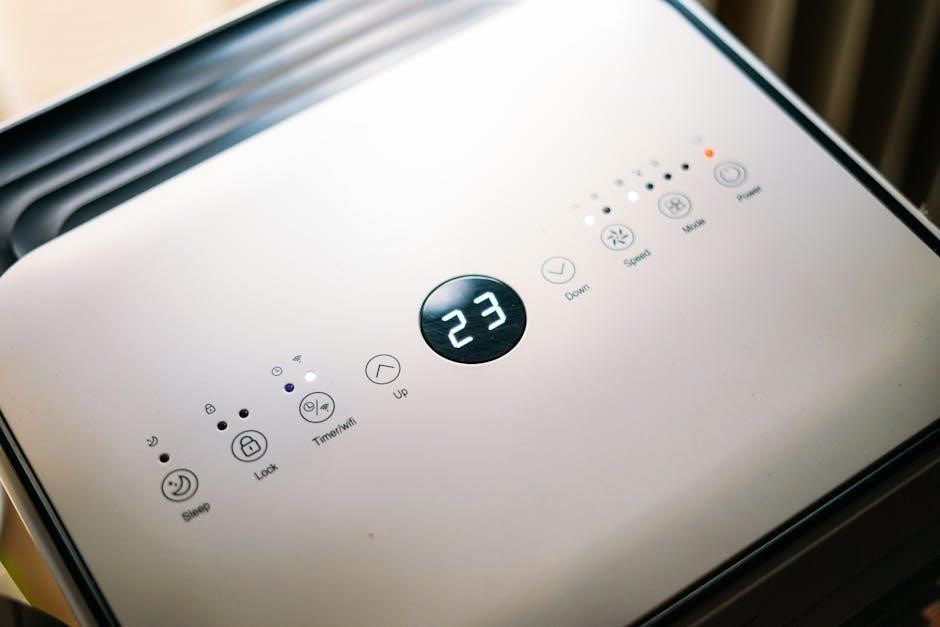
Pro Select thermostats feature an intuitive interface. The display clearly shows the current room temperature, the set temperature, and the operating mode (Heat, Cool, Auto, Off). Buttons are typically labeled with universal icons – up/down arrows for temperature adjustment, a ‘Mode’ button to cycle through operating modes, and a ‘Fan’ button for fan control.

Pressing ‘Mode’ allows selection between heating, cooling, automatic switching, or complete system shutdown. The ‘Fan’ button toggles between ‘Auto’ (fan runs only during heating/cooling) and ‘On’ (fan runs continuously). Familiarize yourself with these controls for optimal operation and comfort.

Programming Your Pro Select Thermostat

Pro Select thermostats allow customized schedules for energy savings and comfort. Program different settings for weekdays versus weekends, creating tailored temperature profiles.

Setting Up a Schedule

Pro Select thermostats simplify temperature management through programmable schedules. Access the scheduling function via the thermostat’s interface, typically involving buttons or a digital display. Define specific time periods throughout the day – such as ‘Wake,’ ‘Leave,’ ‘Return,’ and ‘Sleep’ – and assign desired temperatures to each. The thermostat automatically adjusts based on this programmed timeline, optimizing comfort and reducing energy consumption. Remember to consider your daily routines when establishing these settings. You can often create multiple schedules for different days of the week, accommodating varying lifestyles.

Creating Different Programs for Weekdays and Weekends

Pro Select thermostats allow distinct programming for weekdays versus weekends, recognizing differing schedules. Within the scheduling menu, locate options to create separate programs – often labeled ‘Weekday’ and ‘Weekend.’ Customize temperature settings for each time period (Wake, Leave, Return, Sleep) independently within each program. This ensures optimal comfort and energy savings, aligning with typical lifestyle variations. For example, weekend programs might feature later ‘Wake’ times and different ‘Return’ temperatures. Save each program to activate the tailored heating and cooling schedule for those specific days.

Temporary Holds and Overrides

Pro Select thermostats feature ‘Hold’ and ‘Override’ functions for immediate temperature adjustments. A ‘Hold’ maintains a set temperature indefinitely, bypassing the programmed schedule until manually canceled. ‘Override’ temporarily adjusts the temperature for a specified duration, after which the thermostat reverts to its scheduled program. Access these options via the thermostat’s buttons or, if applicable, through the connected app. These features are ideal for unexpected schedule changes or short-term comfort needs, providing convenient control without permanently altering your established programming.

Advanced Features and Settings

Pro Select thermostats boast customizable options like fan control (Auto/On), filter change reminders, and adjustable backlight settings for personalized comfort and efficient operation.

Fan Control Options (Auto, On)

Pro Select thermostats provide two primary fan control settings: “Auto” and “On.” Selecting “Auto” mode ensures the fan operates only during heating or cooling cycles, optimizing energy efficiency and maintaining consistent temperatures. This prevents continuous airflow when the system isn’t actively heating or cooling. Conversely, the “On” mode keeps the fan running constantly, regardless of temperature.

This continuous airflow can improve air circulation throughout your home, potentially enhancing comfort and aiding in even temperature distribution. However, it will consume more energy. The user manual details how to toggle between these modes using the thermostat’s interface, allowing you to tailor operation to your specific needs and preferences.

Filter Change Reminders

Pro Select thermostats often include a helpful filter change reminder feature, crucial for maintaining HVAC system efficiency and air quality. This function prompts you to replace your air filter at regular intervals, preventing dust and debris buildup. The user manual explains how to activate and customize this reminder.

Typically, you can set the reminder based on a time period (e.g., every 30, 60, or 90 days) or operating hours. Ignoring filter changes can lead to reduced airflow, increased energy consumption, and potential system damage. Regularly replacing the filter ensures optimal performance and prolongs the life of your heating and cooling equipment.

Backlight Settings and Display Customization

Pro Select thermostats frequently offer adjustable backlight settings for enhanced visibility in low-light conditions. The user manual details how to control the backlight’s brightness or set it to automatically activate with button presses. Some models allow complete customization of the display, including options for screen timeout duration.

These features improve usability and conserve energy. You might be able to choose between different display modes or adjust the contrast. Refer to your specific model’s manual for detailed instructions on accessing and modifying these settings to personalize your thermostat experience and optimize readability.

Troubleshooting Common Issues

Pro Select thermostats may experience issues like failing to power on or inaccurate readings; the user manual provides solutions for these frequent problems.

Thermostat Not Turning On

If your Pro Select thermostat fails to power on, first verify the power source. As a dual-power model, it operates on 24V AC or two AA alkaline batteries. Check the circuit breaker if using AC power, ensuring it hasn’t tripped. If battery-powered, replace the batteries with fresh ones, confirming correct polarity.

Inspect the wiring connections, ensuring they are secure and haven’t loosened. A loose wire can interrupt power flow. Consult the installation instructions manual for proper wiring diagrams. If the issue persists after these checks, consult a qualified HVAC technician for further assistance, as it could indicate a more complex problem within the thermostat or heating/cooling system.

Incorrect Temperature Readings

If your Pro Select thermostat displays inaccurate temperatures, several factors could be at play. Ensure the thermostat isn’t directly exposed to sunlight, drafts, or heat-generating appliances, as these can skew readings. Verify the thermostat is calibrated correctly; some models allow for temperature offset adjustments within the settings menu.

Check for obstructions blocking airflow around the thermostat. A dirty air filter in your HVAC system can also contribute to inaccurate readings. If the problem continues, compare the thermostat’s reading with a reliable thermometer placed nearby. If a significant discrepancy exists, professional calibration or replacement may be necessary.

Connectivity Problems (if applicable)

If your Pro Select thermostat features Wi-Fi connectivity and you’re experiencing issues, first confirm your home network is functioning correctly. Ensure the thermostat is within range of your router and that the Wi-Fi password entered is accurate. Restart both the thermostat and your router as a preliminary troubleshooting step.

Check for firmware updates available through the Pro Select app or website, as these often address connectivity bugs. If problems persist, consult the Pro Select support resources or FAQ section for specific guidance related to your model. A factory reset might be necessary as a last resort.

Downloading the Pro Select Thermostat Manual

Accessing the Pro Select manual is easy! Free PDF versions are readily available online through the Pro Select website for various models like PSTSP21AWH.

Finding the PDF Manual Online

Locating your Pro Select thermostat’s PDF manual is a straightforward process. Begin by performing a web search using the specific model number – for example, “ProSelect PSTSP21AWH manual PDF.” Numerous websites archive these documents, offering direct download links. The official Pro Select website is also a primary resource; navigate to their support or downloads section.

Alternatively, utilize online document repositories. These platforms often host manuals for a wide range of appliances, including Pro Select thermostats. Ensure the downloaded manual corresponds precisely to your model to guarantee accurate installation and operational guidance. Always verify the source’s reliability before downloading.

Important Information Contained in the Manual

The Pro Select thermostat manual provides crucial details for safe and effective operation. Expect comprehensive wiring diagrams, essential for correct installation, differentiating between 24V AC power and battery operation. It details setting schedules, creating programs for weekdays/weekends, and utilizing temporary holds.

Furthermore, the manual explains fan control options (Auto, On), filter change reminders, and display customization. Troubleshooting sections address common issues like power failures or incorrect readings. Understanding dual power operation and terminology is also covered, ensuring optimal performance and longevity of your thermostat.

Battery Replacement and Maintenance

Pro Select thermostats utilize AA alkaline batteries for backup or primary power; regular checks and timely replacements ensure consistent, reliable temperature regulation and functionality.

Recommended Battery Type

Pro Select thermostats are designed for optimal performance with standard AA alkaline batteries. While other battery types might function, using alkaline ensures the longest lifespan and most consistent power delivery to the thermostat’s internal components. Avoid rechargeable batteries initially, as their voltage can sometimes differ, potentially causing inaccurate readings or operational issues.

Specifically, non-heavy-duty alkaline batteries are generally recommended. Always replace both batteries simultaneously, even if only one appears depleted, to prevent potential imbalances and ensure continued reliable operation. Using the correct battery type safeguards the thermostat’s functionality and prolongs its overall lifespan.

Extending Battery Life

To maximize the longevity of your Pro Select thermostat’s batteries, consider a few simple strategies. Avoid frequent temperature adjustments, as each change consumes power. Utilize the scheduling features to maintain a consistent temperature profile, minimizing unnecessary heating or cooling cycles. If your model offers a backlight, reduce its brightness or set it to automatically turn off after a short period of inactivity.

Furthermore, ensure the thermostat isn’t exposed to extreme temperatures or direct sunlight, which can degrade battery performance. Regularly check for and eliminate any drafts near the thermostat, reducing the workload on the system and conserving power.

Pro Select Thermostat Compatibility

Pro Select thermostats are designed for standard 24 Volt AC heating and cooling systems, or operate with two AA alkaline batteries for versatile installation;

Compatible Heating and Cooling Systems

Pro Select thermostats demonstrate broad compatibility, functioning seamlessly with conventional forced air systems, heat pumps, and radiant heating. They support single-stage, multi-stage, and heat pump configurations, offering flexibility for diverse home setups. Crucially, these thermostats require a 24VAC common (C) wire for optimal performance with most systems. However, dual-power operation allows functionality with just batteries, bypassing the C-wire requirement in certain installations. Compatibility extends to gas, oil, and electric furnaces, ensuring widespread applicability. Always verify voltage requirements before installation to avoid system damage.

Voltage Requirements

Pro Select thermostats are primarily designed for 24 Volt AC (VAC) systems, a standard in most residential heating and cooling setups. This low voltage ensures safe and efficient operation. However, a key feature is ‘dual power’ operation, allowing the thermostat to also run on two AA alkaline batteries as a backup or primary power source. While 24VAC is typical, confirming your existing system’s voltage is crucial before installation. Incorrect voltage can cause malfunction or damage. Do not connect a Pro Select thermostat to a higher voltage source, such as 120VAC or 240VAC.

Understanding Pro Select Terminology

“Pro” in Pro Select originates from Greek, meaning “before” or “forward,” indicating advanced features, while “dual power” signifies battery or 24VAC operation.

“Pro” Prefix Meaning in Context

The prefix “pro” within the Pro Select brand name carries significant etymological weight, originating from the Greek language. Historically, “pro” signified “before,” “forward,” or “in front of,” evolving to denote support or advocacy – as seen in terms like “pro-choice” or “pro-American.”

In the context of Pro Select thermostats, “pro” suggests a level of sophistication and capability beyond standard models. It implies features geared towards professional installers and users who demand reliable, advanced control. Furthermore, it can also allude to a primitive or early form, hinting at foundational quality.

Dual Power Operation Explained

Pro Select thermostats boast a versatile “dual power” operation, a key feature for uninterrupted heating and cooling. This means the thermostat can function using either 24 Volts AC power – the standard for most HVAC systems – or two AA alkaline batteries.

This redundancy ensures continued operation even during power outages, providing peace of mind. The thermostat intelligently switches between power sources. When AC power is restored, it automatically reverts, conserving battery life. This design offers both convenience and reliability, making Pro Select a robust choice.

Resources and Support

Pro Select provides comprehensive support through its official website, offering downloadable manuals, FAQs, and direct contact options for assistance with your thermostat.

Pro Select Website and Contact Information

Pro Select, while seemingly focused through distributors like Pro Office, doesn’t maintain a prominently displayed, dedicated consumer-facing website as of late 2024. Information is often accessed through retailer sites or documentation portals. Direct contact information is similarly dispersed.

However, support can frequently be obtained through the retailer where the thermostat was purchased. Searching for “ProSelect thermostat support” will yield relevant contact details for distributors. For general inquiries related to the ‘pro’ prefix meaning, exploring etymological resources can be helpful. Remember to have your model number ready when seeking assistance.

Frequently Asked Questions (FAQ)

Q: What does “pro” mean in Pro Select? A: It originates from the Greek prefix meaning “before” or “forward,” indicating advanced features.

Q: Does Pro Select offer smart thermostat options? A: Currently, information suggests a focus on traditional, programmable thermostats, not fully integrated smart home systems.

Q: Where can I find a Pro Select thermostat manual? A: Search online for your specific model number (e.g., PSTSP21AWH) to locate downloadable PDF manuals. Retailer websites are also good resources.

Q: What power source does it use? A: Pro Select thermostats utilize dual power – 24V AC or two AA alkaline batteries.

mastering arcgis pro 2nd edition pdf

Mastering ArcGIS Pro, 2nd Edition, provides comprehensive guidance for both beginners and experienced users seeking to enhance their geospatial skills.

This resource details 2D/3D mapping and data editing, offering a downloadable PDF for convenient learning and practical application within ArcGIS Pro.

What is ArcGIS Pro?

ArcGIS Pro represents Esri’s flagship desktop Geographic Information System (GIS) application, a powerful tool for creating, analyzing, and managing geospatial data. Unlike its predecessor, ArcMap, ArcGIS Pro is built on a 64-bit architecture, enabling it to handle larger datasets and perform more complex analyses efficiently.

The software facilitates both 2D and 3D mapping, offering a versatile platform for diverse applications, from urban planning and environmental monitoring to resource management and disaster response. The 2nd Edition of “Mastering ArcGIS Pro” delves into these capabilities, providing practical guidance for users to leverage the software’s full potential. Accessing the book’s PDF format allows for convenient study and hands-on practice with the software’s features.

The Importance of the 2nd Edition

The 2nd Edition of “Mastering ArcGIS Pro” is crucial due to the software’s continuous evolution and the introduction of new features. This updated resource ensures users are equipped with the latest workflows and best practices for optimal performance.

The book addresses intermediate-level skills, building upon foundational knowledge and guiding users through advanced techniques like creating spatial map series and editing geospatial data. The availability of a downloadable PDF version enhances accessibility, allowing for learning on various devices. It supports curriculum goals with clear analysis and educational value, making it ideal for both self-study and classroom environments, ensuring users can effectively utilize ArcGIS Pro’s capabilities.

Key Authors and Contributors

Maribeth Price authored “Mastering ArcGIS Pro, 2nd Edition,” while Tripp Corbin contributes significantly with related works like the ArcGIS Pro Cookbook.

Maribeth Price: Author Profile

Maribeth Price is the primary author of “Mastering ArcGIS Pro, 2nd Edition,” a definitive guide for users aiming to deeply understand and effectively utilize Esri’s powerful GIS software. Her expertise lies in translating complex geospatial concepts into accessible, practical knowledge.

Price’s approach focuses on equipping readers with the skills to confidently navigate ArcGIS Pro’s functionalities, from foundational principles to advanced analytical techniques. She meticulously covers data management, editing, and visualization, ensuring a comprehensive learning experience. The book, available as a downloadable PDF, reflects her dedication to providing a valuable resource for both students and professionals.

Her work emphasizes hands-on learning, encouraging users to apply concepts through practical exercises and real-world examples, solidifying their mastery of ArcGIS Pro.

Tripp Corbin: Author Profile & Related Works

Tripp Corbin is a highly respected figure in the GIS community, renowned for his expertise in ArcGIS Pro and his commitment to accessible geospatial education. He authored “Learning ArcGIS Pro 2,” a beginner-friendly guide complementing “Mastering ArcGIS Pro, 2nd Edition,” and co-authored the “ArcGIS Pro Cookbook.”

Corbin’s work focuses on practical application, offering step-by-step instructions and real-world examples to empower users. His publications, often available as downloadable PDFs, cater to diverse skill levels, from novices to experienced professionals. He also developed “Fundamental ArcGIS Pro Skills: Workbook 1,” building a structured learning path.
His contributions extend beyond books, encompassing training materials and resources designed to enhance proficiency in geospatial data management, analysis, and visualization within ArcGIS Pro.

Core Concepts Covered in the Book

Mastering ArcGIS Pro 2nd Edition delves into 2D/3D mapping, geospatial data editing, and spatial analysis fundamentals, offering practical skills for professionals.

2D and 3D Mapping Techniques

Mastering ArcGIS Pro, 2nd Edition, extensively covers both 2D and 3D mapping techniques, equipping users with the skills to visualize geospatial data effectively. The book guides readers through creating informative and visually appealing maps, utilizing ArcGIS Pro’s robust cartographic tools.

Users will learn to symbolize data appropriately, design effective map layouts, and leverage the software’s capabilities for creating dynamic and interactive maps; Furthermore, the 2nd edition delves into advanced 3D visualization techniques, enabling users to explore and analyze data in a three-dimensional environment. This includes creating scenes, working with elevation surfaces, and generating realistic 3D renderings.

The downloadable PDF format allows for convenient access to these techniques, supporting hands-on learning and practical application of the concepts presented.

Geospatial Data Editing

Mastering ArcGIS Pro, 2nd Edition, provides detailed instruction on geospatial data editing within the ArcGIS Pro environment. The book covers fundamental editing tools and workflows, enabling users to confidently modify and maintain geospatial datasets.

Readers will learn techniques for creating new features, updating existing attributes, and resolving topological errors. The guide emphasizes best practices for data quality and integrity, ensuring accurate and reliable geospatial information. Advanced editing topics, such as versioning and advanced editing tools, are also explored.

Accessing the content through the downloadable PDF allows for focused learning and practical exercises, solidifying skills in data editing and management within ArcGIS Pro.

Spatial Analysis Fundamentals

Mastering ArcGIS Pro, 2nd Edition, lays a strong foundation in spatial analysis, equipping users with the skills to extract meaningful insights from geospatial data. The book details core analytical techniques, including proximity analysis, overlay operations, and spatial statistics.

Readers will learn how to perform queries, create buffers, and analyze spatial relationships to solve real-world problems. The guide emphasizes the importance of appropriate analytical methods and interpretation of results. Advanced topics, such as geostatistics and network analysis, are also covered.

The downloadable PDF format facilitates self-paced learning and allows users to practice these fundamental spatial analysis techniques within ArcGIS Pro.

Accessing the 2nd Edition PDF

Mastering ArcGIS Pro 2nd Edition’s PDF is available through official Esri resources and select third-party sites, requiring careful consideration of legality and ethics.

Official Esri Resources

Esri, the creator of ArcGIS Pro, is the primary and most reliable source for obtaining the Mastering ArcGIS Pro 2nd Edition PDF. While a direct, free PDF download isn’t typically offered, Esri provides access through various subscription models and learning platforms.

Users with active Esri Training subscriptions often receive complimentary access to digital resources, including eBooks like this one. Checking the Esri Press bookstore is also recommended, as they frequently offer digital versions for purchase. Furthermore, educational institutions partnering with Esri may have site licenses granting students and faculty access to the PDF.

Always prioritize official channels to ensure you receive a legitimate, up-to-date copy and support the developers of the software. This also guarantees adherence to copyright regulations and avoids potential security risks associated with unofficial download sources.

Third-Party Download Sites & Considerations

Numerous third-party websites claim to offer the Mastering ArcGIS Pro 2nd Edition PDF for free download. However, exercising extreme caution is crucial when utilizing these sources. Many sites host pirated copies, potentially exposing your device to malware, viruses, and legal repercussions.

Downloading copyrighted material without authorization is illegal and unethical. Furthermore, the quality of PDFs from unofficial sources is often poor, containing missing pages, formatting errors, or outdated content. While tempting, the risks significantly outweigh the benefits.

If official Esri resources are inaccessible, consider exploring legitimate online libraries or purchasing a digital copy from a reputable retailer. Prioritize legal and ethical access to ensure a safe and reliable learning experience.

Legal and Ethical Considerations for PDF Downloads

Downloading a PDF of Mastering ArcGIS Pro 2nd Edition from unauthorized sources raises significant legal and ethical concerns. Copyright law protects the authors and publisher, Esri, granting them exclusive rights to distribute their work. Obtaining the PDF illegally constitutes copyright infringement, potentially leading to legal penalties.

Ethically, supporting authors and publishers by purchasing legitimate copies ensures the continued creation of valuable educational resources. Utilizing pirated materials devalues their work and undermines the industry. Consider the impact on future editions and the availability of similar learning tools.

Always prioritize legal acquisition through official channels to respect intellectual property rights and contribute to a sustainable ecosystem for geospatial education.

Book Structure and Chapter Breakdown

Mastering ArcGIS Pro 2nd Edition is logically structured into three parts: Foundations, Data Management/Editing, and Advanced Analysis/Modeling, offering a progressive learning path.

Part 1: Foundations of ArcGIS Pro

Part 1 of Mastering ArcGIS Pro 2nd Edition meticulously lays the groundwork for successful GIS implementation. This section focuses on establishing a firm understanding of the ArcGIS Pro interface, project management, and fundamental mapping principles.

Readers will learn to navigate the software effectively, create and manage maps, and explore essential cartographic techniques. The initial chapters delve into data sources, coordinate systems, and projections, crucial for accurate geospatial analysis.

Furthermore, this part introduces symbolization and labeling, enabling users to visually represent data effectively. It’s designed to build a solid base for tackling more complex tasks in subsequent sections, ensuring a smooth learning curve for all skill levels.

Part 2: Data Management and Editing

Part 2 of Mastering ArcGIS Pro 2nd Edition dives into the critical aspects of geospatial data handling. This section provides detailed instruction on importing, creating, and modifying various data formats within ArcGIS Pro.

Readers will master geodatabase design, attribute management, and advanced editing tools. The content covers techniques for ensuring data integrity, performing topological edits, and resolving data inconsistencies.

Furthermore, this part explores versioning and replication strategies for collaborative data management. Practical exercises guide users through real-world scenarios, solidifying their ability to efficiently manage and maintain geospatial datasets, essential skills for any GIS professional.

Part 3: Advanced Analysis and Modeling

Part 3 of Mastering ArcGIS Pro 2nd Edition unlocks the power of spatial analysis and modeling capabilities within the software. This section delves into sophisticated techniques for extracting meaningful insights from geospatial data.

Readers will learn to perform spatial statistics, network analysis, and suitability modeling. The book covers geoprocessing tools, Python scripting for automation, and the creation of custom models using ModelBuilder.

Emphasis is placed on applying these techniques to solve real-world problems, such as environmental monitoring, urban planning, and resource management. Practical exercises and case studies reinforce understanding and build proficiency in advanced GIS workflows.

Utilizing the Book for Learning

Mastering ArcGIS Pro 2nd Edition excels as both a hands-on exercise guide and a comprehensive reference, enhanced by integrated online learning resources.

Following Along with Exercises

Mastering ArcGIS Pro, 2nd Edition, is designed to facilitate practical learning through a series of well-structured exercises. The book’s content is intentionally crafted to support curriculum goals, offering clear analysis and substantial educational value.

Readers are encouraged to actively engage with the provided datasets and step-by-step instructions, fostering a deeper understanding of ArcGIS Pro’s functionalities. The downloadable PDF format allows for convenient access and easy navigation during exercise completion.

Successfully following along with these exercises will build a strong foundation in geospatial data handling, analysis, and visualization, ultimately empowering users to confidently apply their newly acquired skills to real-world projects. The book’s approach ensures a hands-on, immersive learning experience;

Using the Book as a Reference Guide

Mastering ArcGIS Pro, 2nd Edition, excels as a comprehensive reference guide for ArcGIS Pro users of all levels. Its detailed explanations and clear illustrations make it an invaluable resource for quickly resolving specific tasks or understanding complex concepts.

The downloadable PDF format enables efficient searching and cross-referencing, allowing users to pinpoint relevant information with ease. Whether you’re a seasoned GIS professional or a student learning the software, this book provides readily accessible answers to common challenges.

Its structured organization and thorough coverage of ArcGIS Pro’s tools and techniques ensure it remains a useful companion throughout your GIS journey, supporting both learning and practical application.

Integrating with Online Learning Resources

The Mastering ArcGIS Pro, 2nd Edition PDF seamlessly integrates with a wealth of online learning resources, enhancing the learning experience. Supplement your study with Esri’s official documentation, online training courses, and the ArcGIS Pro community forums.

Utilize the book as a foundational text while exploring interactive tutorials and webinars available online. This blended approach allows for a deeper understanding of concepts and practical skill development.

Leverage online platforms to connect with fellow learners, share knowledge, and troubleshoot challenges. The downloadable PDF ensures convenient access to the book’s content alongside these dynamic online resources, maximizing your learning potential.

ISBN and Digital Formats

Mastering ArcGIS Pro, 2nd Edition, is available in print and digital formats, with ISBNs 9781264091201/1264091206 and 9781264528905/1264528906.

Print ISBNs: 9781264091201, 1264091206

Mastering ArcGIS Pro, 2nd Edition, boasts print ISBNs of 9781264091201 and 1264091206, representing the physical, tangible version of this essential geospatial guide. This edition, authored by Maribeth Price, is a cornerstone resource for professionals and students alike.

The printed copy allows for traditional learning methods – highlighting, note-taking directly within the pages, and a tactile experience often preferred by visual learners. Obtaining the print version ensures access to the complete content, independent of digital access or device compatibility. It’s a reliable, permanent addition to any GIS library, offering a robust learning experience.

Digital ISBNs: 9781264528905, 1264528906

Mastering ArcGIS Pro, 2nd Edition, is readily available in digital formats, identified by ISBNs 9781264528905 and 1264528906. These ISBNs signify access to the eBook or PDF version, offering portability and convenience for modern learners.

Digital access allows for features like searchable text, bookmarking, and note-taking directly on devices. Choosing the digital edition can result in significant cost savings – up to 80% compared to the print version. This format is ideal for users who prefer reading on tablets, computers, or e-readers, providing instant access to the latest geospatial techniques and workflows.

Related Resources and Cookbooks

ArcGIS Pro Cookbook by Corbin & Larson complements Mastering ArcGIS Pro, offering practical recipes for geospatial data management and analysis workflows.

ArcGIS Pro Cookbook by Tripp Corbin & Kirk Larson

ArcGIS Pro Cookbook, authored by Tripp Corbin and featuring a foreword by Kirk Larson, serves as an invaluable companion to Mastering ArcGIS Pro. This resource focuses on practical application, guiding users through creating, managing, analyzing, maintaining, and visualizing geospatial data using Esri’s ArcGIS Pro.

It’s designed to leverage the powerful tools within ArcGIS Pro, offering key features that empower users to build informative maps and perform robust geospatial analysis. The cookbook approach provides readily applicable solutions to common GIS challenges, complementing the more foundational learning offered in Mastering ArcGIS Pro, 2nd Edition. It’s a fantastic resource for those seeking to immediately implement their ArcGIS Pro skills in real-world projects.

Fundamental ArcGIS Pro Skills: Workbook 1

Fundamental ArcGIS Pro Skills: Workbook 1 acts as a crucial stepping stone for individuals beginning their journey with Esri’s powerful GIS software. This workbook is specifically designed to build a solid foundation in core ArcGIS Pro functionalities, preparing users for more advanced concepts explored in resources like Mastering ArcGIS Pro, 2nd Edition.

It’s an intermediate-level resource, ideal for those who’ve grasped the basics and are ready to delve into creating spatial and bookmark map series, alongside mastering spatial and attribute editing techniques. The workbook’s practical exercises and clear instructions facilitate hands-on learning, ensuring users can confidently apply their newfound skills.